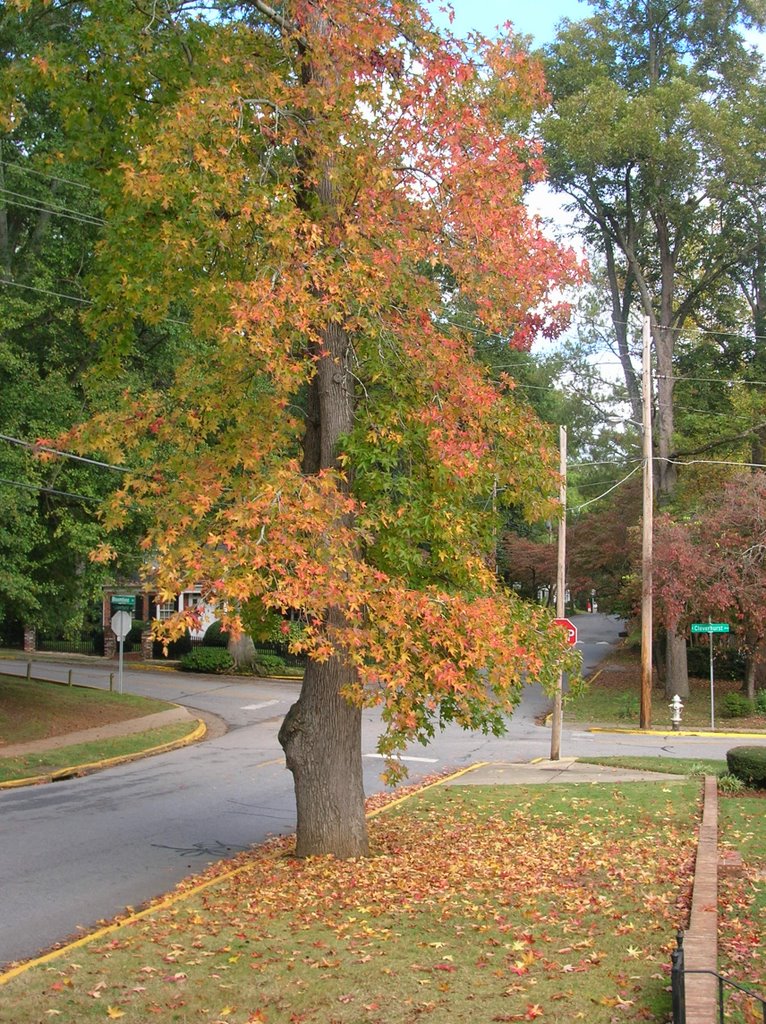
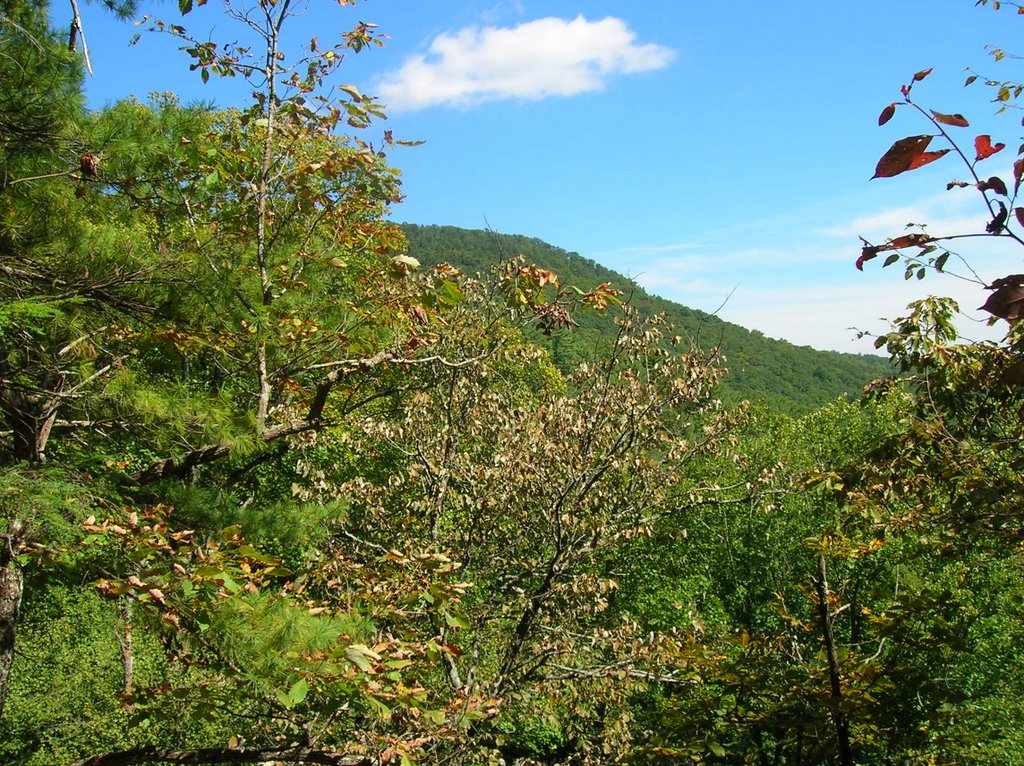
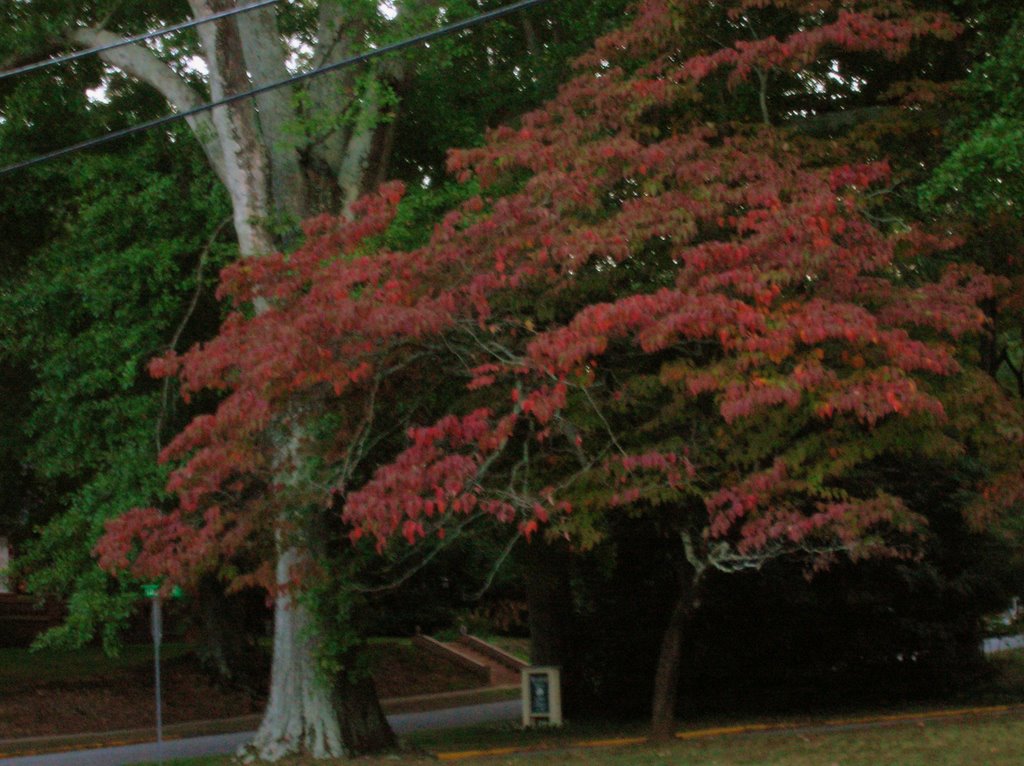
How beautiful the world can be...


Protruding from the wiry, spindly brush
with skin pulled tight like the head of a drum
encasing sweet, warm droplets of sun-ripe
ruddy juice--delicate and plump, teasing,
drawing a covetous gaze as velvet
tempts you to graze it with your hand or cheek.
Dark with soft, placating sheen collecting
all energy and light like small black holes
of deep summer, they ensnare and transfix
and you salivate and long for a taste
and the event horizon is traversed.
What could approach perfection so nearly
as a warm burst of tartness on your tongue
that stains your mouth, seeps into the creases
of your hands like hairline cracks in your skin
and just beneath, a reservoir of blood?
Oh, I remember blackberry-picking
and how the sting of nettles scrawling bloody
scratches on your arms was worth the reward--
pain for sweetness on your tongue, an exchange
some will never choose to make. But I hope
in my life to always pick blackberries.
Tybee Island is not my favorite of beaches, but this weekend it sufficed to make a relaxing, exhilarating time. May I suggest the sunrise?


The Black Hills of western South Dakota have always been a sacred place to the Lakota people. Their Lakota name, Paha Sapa, means "the heart of everything that is." In 1868, the U.S. signed the Treaty of Fort Laramie which guaranteed that the Black Hills would remain Sioux land. However, less than a decade passed before rumors of gold in the Black Hills led our country to revoke that promise. In 1877, after several land disputes had led to battles between the U.S. government and the Sioux nation, Congress signed a bill that forced the Lakota to sell the Black Hills, their sacred lands, and return to their reservations.
One of those mountains, known to the Lakota as "The Six Grandfathers," was renamed in 1885 after a New York lawyer, Charles E. Rushmore, during a gold expedition. According to Wikipedia, Rushmore saw this mountain and asked its name; his companion said "Never had any but it has now--we'll call the damn thing Rushmore." In 1927, to increase tourism in the Black Hills, the carving of the Four Faces began.
Our trip took us unexpectedly to Mount Rushmore, which is a celebrated monument of our nation's government that should never have been carved. Our government broke its promise to these people by taking this land from them, land that they knew as sacred. Then we defiled that land by carving faces that represent our government which had so wronged the Lakota people. As I stood and looked at this monument, faces carved in stone of people that our country reveres so highly, I could not justify it in any way. Is it offensive to God? I am in no position to judge, but my gut tells me yes--it does not revere Him in any way, and the story behind it is a tale of gross injustice committed against a people that He loves. And from a purely aesthetical standpoint, who are we to think that we can add value to the natural world by carving up these beautiful hills? Sad, on so many levels. And I am thankful that I was able to see it, if only to rouse this sense of injustice inside of me.
A theme that arose from our mission trip was that of unity. In many ways, the Lakota are disunified--those who live in poverty, sadly, do what they can to keep others from overcoming. They would rather see everyone remain stuck in the same miry condition than to allow talented and ingenuitive individuals rise up to something better. If a few could overcome the poverty and the addiction, then it could really be a springboard for change within the whole tribe--and there are many talented artists, storytellers, and entrepreneurial minds among the Lakota. But the masses put great effort into keeping these individuals out of work, and they scorn one another for their successes... and it makes me sad not only for those who are being oppressed, but for their oppressors as well, who are indirectly perpetuating their own oppression.
These are the words that we shared with the Lakota community in Whiteclay. I may have been the messenger, but the message was the Lord's.
All of us on this earth are God's people... and though we are many and varied, God designed us all, and desires for us to live in peace and to be unified through Him. Psalm 133 declares, "How good and pleasant it is when brothers live together in unity!" We are the brothers and sisters, and it is God's Spirit that can bring us--each family, the whole of the Lakota people, and every tribe and nation of the world--together in Him.
The tradition of the Three Sisters--corn, beans, and squash, grown together in a single plot of land--began out of the understanding the Indians had of a need for unity between the crops. Corn stalks grow strong and tall, providing a support for the beans, which need something sturdy to climb. The beans, in return, support the corn stalks, and they add their nitrogen to the soil so that future generations of corn might have the nutrients they need to prosper. Spiny squash vines run along the ground, defending the entire garden from predators. Their shallow roots keep the soil moist so that nothing dries out.
The Three Sisters portray a beautiful picture of the unity that God intended for all His creation--most importantly for us, His people.
But what if the corn, towering over the squash and beans, blocked them from receiving the sunlight? What if the beans climbed the corn stalks to pull the corn down? What if the squash vines tangled and choked the corn and the beans? If the crops lived in competition and strife, they would destroy each other. And they would ultimately destroy themselves too, since none of the Three Sisters can prosper without the help of the others. If each tried to pull its sisters down, then none would thrive.
So it is with God's people. We are all brothers and sisters through Him, and He says that it is good and pleasant for us to live in unity. Envy, strife, anger, jealousy, are seeds that our enemy sows to try and bring division among us in our homes and our communities, to choke out our love and concern for each other.
But our Lord Jesus commanded us to love one another, just as He loves us. He demonstrated that love in His life on earth, and in His sacrifice on the cross for each of us. When we love each other as Jesus taught, then we do not pull each other down--instead, we lift each other up and help each other grow.
This is unity that God declares good and pleasant--and our unity as brothers and sisters in God our Father brings greater abundance of life to all of us.
While we were there, God used us to turn this:
Into this:
What began as a solidly packed hill of dry, flaked earth, permeated with weeds and lifeless, rotting tangles of grass roots will become a Three Sisters garden, at the southern border of Whiteclay. As we dug weeds which were anchored deep into the fallow ground, as we tilled the soil and broke up the rocky hunks and made it arable again, as we planted and watered the corn seeds which will shoot up within days, we prayed that God would do this very same work in the hearts of His beloved, the Lakota. There is much dry, packed soil to till, and I believe that we were used to begin that process. Only God knows when the harvest will be ready... but I have faith that there will be a harvest, that beauty will come once again to Whiteclay--in the physical land that has been reclaimed for God, and in the people who are now so content with their filthy rags because they cannot imagine anything better. When this garden begins to flourish, when God transforms the southern gate to the reservation into a place of great physical beauty, may the Lakota begin to see their Creator's beauty and harmony reflected in the land itself. May they begin to conceive of God's plans to prosper them, to give them a hope and a future... and may they unify themselves as a people, under God their Father, to let go of the old and take hold of the new! The missionaries who live with these people are Bruce and Marsha Bonfleur, and their name is French for "good flower." Thank You, God, for sending Good Flowers to such a desolate land and a hopeless people, to bring them hope for new life!


Days like today are days that make me feel the most alive--the sky is thick and dark and the wind is unhindered. The windows are open and I am curled up on my futon wrapped in my fleece jacket with a book and a glass of red wine, pausing from my reading every few moments to listen to the wind play the trees like pan pipes. There is no rain, only the expectation of rain--but when will it come? And when it does come, will it be announced by great peals of thunder, or will it steal in gradually, patient and taut with all the energy of a sweet symphony?
Spring and summer in Georgia are hot and mellow, a fever that dulls first the mind and then, eventually, the heart and soul. All is heavy, and the air just becomes thicker and denser, until you feel you are swimming in a yellow delirium as thick as molasses.
Then one day, you awake to the whisper of the air to the trees, the grasses, the clouds and birds and all the world. And you go out, and it whispers to you too, and cuts sharply into your mind as acid through oil. Suddenly the world is alive with energy and purpose, and it intends to whirl you along. You stand, spread-eagle, and your hair flies away and your eyes well up from the air-blasts, and all around you and within you is electrified--the earth, the sky, the water, and all life driven by the same energy, all connected by the bonds of shared excitement.
When I go out tomorrow, the earth will be strewn with life--petals and blossoms that gave themselves up to the fury of the storm. All will be calm, all will be quiet like glass, like the grave. The air will be a little thinner and the earth a little lighter, and my mind a little freer, a little more awake and aware. Every breath, every nerve, every pump of my heart are an exhilarating gift that I cannot, in that moment, take for granted--a life so simple, yet too extraordinary to comprehend.
I love wildflowers. I love them for their special, unique beauty that a neatly trimmed flower-bed can never duplicate. I love the way that each flower has its own season in which to bloom and flourish, whether it is the summer sunflower or the winter gentian. I love the way they sing, raw and unrefined, like the folklorists of the earth.
The season of violets is just coming to a close--they first began appearing in February and lasted through the chilly season, and now are yielding to the spring bloomers--dandelions, wisteria, and others. But violets have a special meaning to me...
Here, I will share with you an excerpt from a narrative I wrote about a time in my life when I was truly depressed, and how God used the world around me to lift me out of the pit I was in. I hope you enjoy it.


I was ever so thankful this weekend for a chance to get away--from Athens and my computer and life as I know it right now. My backpacking class drew to a close with a class trip to Blood Mountain, Georgia's fifth highest peak, in Blairsville. I am sure I have said this before, but when I am hiking, I feel closer to God than in any other moments of my life, because I feel like I can really worship Him in a pristine corner of His creation, somewhere special and holy and undefiled by human touch. Even among people who do not believe in the God I love, there is a sense of awesome wonder when one is out in nature... looking out at a distant mountain peak, or down into a hazy valley, or through the ground cover of dead leaves at the first wildflowers of spring that are beginning to push their small, shy heads up out of the rich earth. In this place, it is hard to deny the existence of some power that is greater than yourself.


Let everything that has breath praise the Lord...
I received the following e-mail from the Natural Resources Defense Council regarding the preservation of Canada's boreal forest. I've blogged a couple of times now in reference to this ancient wilderness (look here and here). Why, as a native of the southeastern United States, am I so passionate about this particular part of the world?
The boreal forest of Canada is one of the largest remaining intact natural regions in the world. It is home to a variety of wildlife including caribou, bears, wolves, and lynx. It is the summer range for about 1/3 of North American songbirds and 3/4 of North American waterfowl. Its ecology is complex and varied, with forests, mountains, lakes, wetlands, and rivers. Such a place needs to be protected, lest it be lost. There are programs and initiatives in place to protect and preserve large portions of the region, and still others aimed at developing eco-friendly practices within its neighboring communities. The boreal forest is a valuable North American biome, and the more people who become aware and empassioned about its need for preservation, the more positive progression we will see in the efforts to save this forest.
Anyway, on to the e-mail. If you click the link, you can sign your name to a letter to the Manitoba government, urging them to take action. It only takes five seconds, and I have to believe that it makes a difference.

Truly the quince flower has found a special niche, to reach the peak of its blooming season right in the harshest stretch of winter, whilst nearly all other flora lies dormant in anticipation of spring.
Another tree falls, and the taiga mourns with groaning—not the sound of groaning, but the deep and silent rumble of the soul whose tremors make tremble even the deepest parts of the earth. For the thud of one more tree against the pock-marked ground is the fearsome, chaotic clanging of one more thick, cold iron bell, another alarum ringing out the imminent fate of all life that once found its haven here.
For these trees have never seen war, never been brushed by plague or pandemic. Peaceful existence, nurturing coexistence has reigned here for centuries as the trees, fir and spruce, elm and oak alike, have offered their raised limbs to the native grouse for nesting, and to the visiting thrushes who stay only until the first gray of winter touches the sky and sends these fair-weather birds to a more tropical locale for the cooler season. These trees have been proud to wear, year after year, the pure and powdery snow from which raptors flee and grizzlies hide themselves, fat with nourishment to last them for months as they sleep in their deep dens until ground thaw.
These old-growth trees have seen light and shadow, each wonderful and terrible in its very special way. Nothing is as jarring as a full neon sun throwing itself against a tinny, white wilderness; nothing is as spectacular as colored hues that glow and dance across the backdrop of space every vernal and autumnal equinox. The forest has seen it all. It has also seen the nightfall, accompanied by the paralyzing beating of owls’ wings and the death squeals of the small rodents, fallen prey to the hunters of the night. The trees have played the part of protector against harsh daylight, weaving their stretching limbs together as a barrier so that the mosses and lichen could thrive gratefully along the shaded ground beneath.
The forest remembers stories of the first appearance of man, coming in on foot from the west, building their settlements nearby, hunting the animals, treading lightly on the land. Even the last of the trees who had known these respectful men, had lived in harmony with them, have long since fallen and returned to the earth, adding their matter back to the soil to the propagation of forest life. But the legacy of these gentle hunters remains, giving strength to the trees and the delicate fibers of life in this harsh, beautiful wilderness.
Nothing like that legacy are these newly arrived men, who come in droves with their clamorous machines to cripple the forest, their hearses to drag the victims away to the nearby paper mill. They upset the balance and the peace of the long-time dwellers here, giving it no thought as they ravage and scar the land. Another tree falls, its once proud limbs crunching against the snow-packed ground. An alarm sounds to the raptors that had nested in those branches, to the fox and the squirrel whose once secret dwellings are now hopelessly destroyed. And a chill pulses through the forest—a chill that the cold, damp summers and thoroughly severe winters have, in thousands of years, never managed to elicit from the proud and brawny trees. For the trees know they can survive the wind and snow and the days upon days of darkness, a barren climate which has caused virtually all other life to shrink away. But against the calloused greed within the hearts of short-sighted man even the stout-willed trees cannot fight. And in each buzz of a saw, each turning of an engine, each loud and brazen guffaw of a hardened, senseless clearcutter preparing to wrap up another day of hard work, the forest can hear the heralding of its own bleak doom. And so it remains, in jarring silence.
The environmental group ForestEthics (forestethics.org) has been engaged in active protest against the clearcutting of Canada's boreal forest (one of the last remaining forest wildernesses on the planet, it turns out)--and met with recent success against Victoria's Secret, according to yesterday's article. The article explains that after weeks of peaceful but very prominent protesting against Victoria's Secret--which sends out about 365 million catalogs each year, printed on 90% virgin paper coming from the ancient and endangered boreal forest of Canada--the company has agreed to stop buying from the pulp mill that logs in this Canadian wilderness.
Did you get that? They have agreed to stop buying. To stop supporting the destruction of this invaluable terrestrial biome which is the unique habitat of many plant and animal species. A major multinational corporation, swayed by the insistent and unrelenting voices of a meager handful who care enough about preserving the Earth's remaining natural environments. I don't know about you, but for me, this is an encouraging thought.
Granted, I have no idea why it is even legal to clearcut such an old-growth forest inn the first place. It is possible to produce paper in a more environmentally sound manner--by logging forests that are young and managed, forests that are re-planted and allowed to grow until they are cut again for more timber. Better yet, recycled paper--isn't there enough paper thrown away each year in America to meet the catalog-printing needs of a company like Victoria's Secret? Why attack one of the last surviving wilderness areas on the planet, just so that we can enjoy the "glossy paper"?
Nevertheless, it happens, and not just because of one company. Will other clients snap up the boreal timber that Victoria's Secret will forgo? Probably so. But I believe that we can speak loud enough to make a difference. We just have to decide what is more important to us:
This?
Or this?
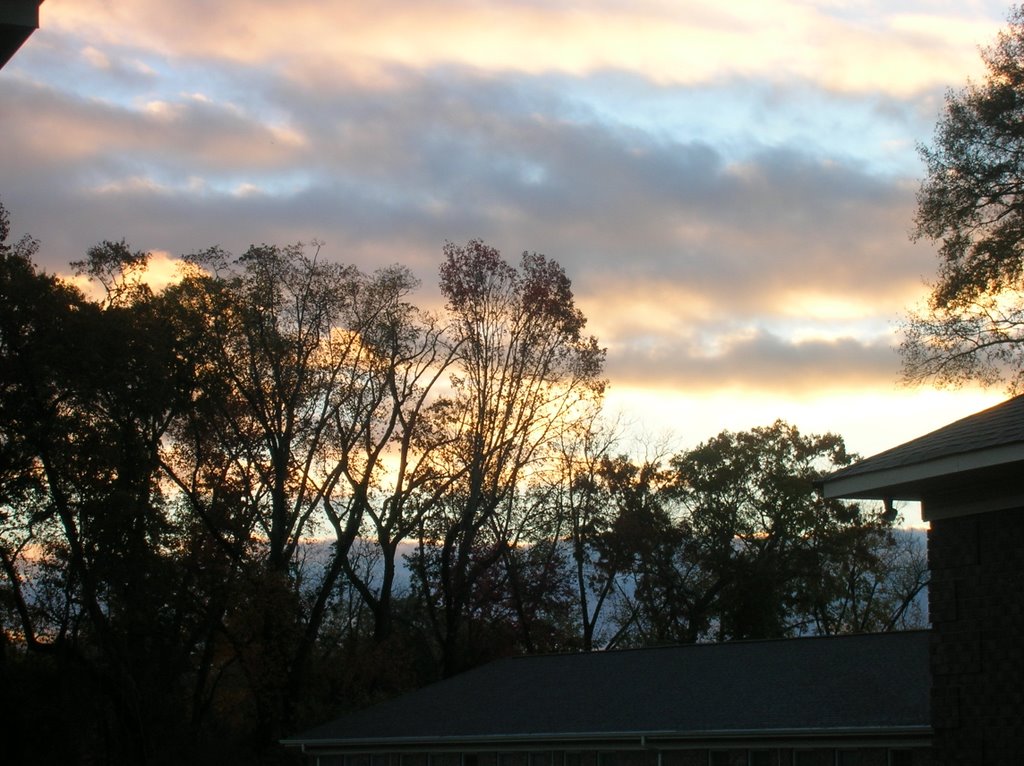 My bedroom window faces northeast, and if you look out you see a bald spot in the horizon (owing to the parking lot to our apartment complex and, further along that vector which starts at my window, the campus of the University of Georgia) which cradles the morning's first sun. When that sun makes its daily appearance there, pushing its way even through my mini-blinds, even through my heavy eyelids, I am hopelessly aroused from my night's sleep, regardless of whether I tumbled into bed eight hours earlier or three.
I don't entirely mind. I see beauty during that first hour of sunlight that many people only read about or view in photographs. I can hear daylight take its first breaths; I can observe the sky blooming with light that only becomes harsher, hotter, heavier as the day ages.
A part of me loves my mornings, though there is another sluggish side that revels in letting my eyelids droop shut for another hour that, in that snoozing reverie, feels like only a few blissful minutes. I am reading a book (an early Christmas gift from my dear and doting Bob) called In the Morning: Reflections From First Light by Philip Lee Williams, and it contains some of the most beautiful language about morning that I have ever had the occasion to read. I recommend it to anyone who wants a deep and many-faceted account of morning--what it means aesthetically, biologically, spiritually... simply. It is novel and lovely, prose wrought with the poetic. It has caused me to think much on morning's place in my ever-evolving life.
How I have always longed to be a morning person... But when you are in high school and college, your social world is constructed around night--theatre and midnight movies, 24-hour coffee shops and bars that close up shop at 2 AM, nightclubs and formal dances, rock concerts and winds symphonies. You stay up later and later out of necessity, until you find yourself on your nights off, sitting at the computer in the middle of the night, idly surfing the web and waiting until "bedtime." That is how, as young people, we are obliged to fashion our lives.
But for me, those who keep going until those early-late hours are missing something quite enchanting contained only in the quietude of morning. Early mornings were the preferred time for Jesus to commune with God the Father, when he "withdrew to lonely places and prayed." It is difficult to find lonely places in the bare and brazen light of day, and it is difficult to pray in the night watches when our biology tells us to be on guard against the dangers of the darkness. But in the morning there is peace and there is solitude. It is a time of day I often missed until I moved here to my beloved east-facing window, which never fails to alert me at the first shard of sunlight that a new day has arisen. I hope only that as I get older and more seasoned, I become more able to leave aside the folly of night life and rise to greet the new day with a growing eagerness.